
This post is also available in Spanish. Read it here
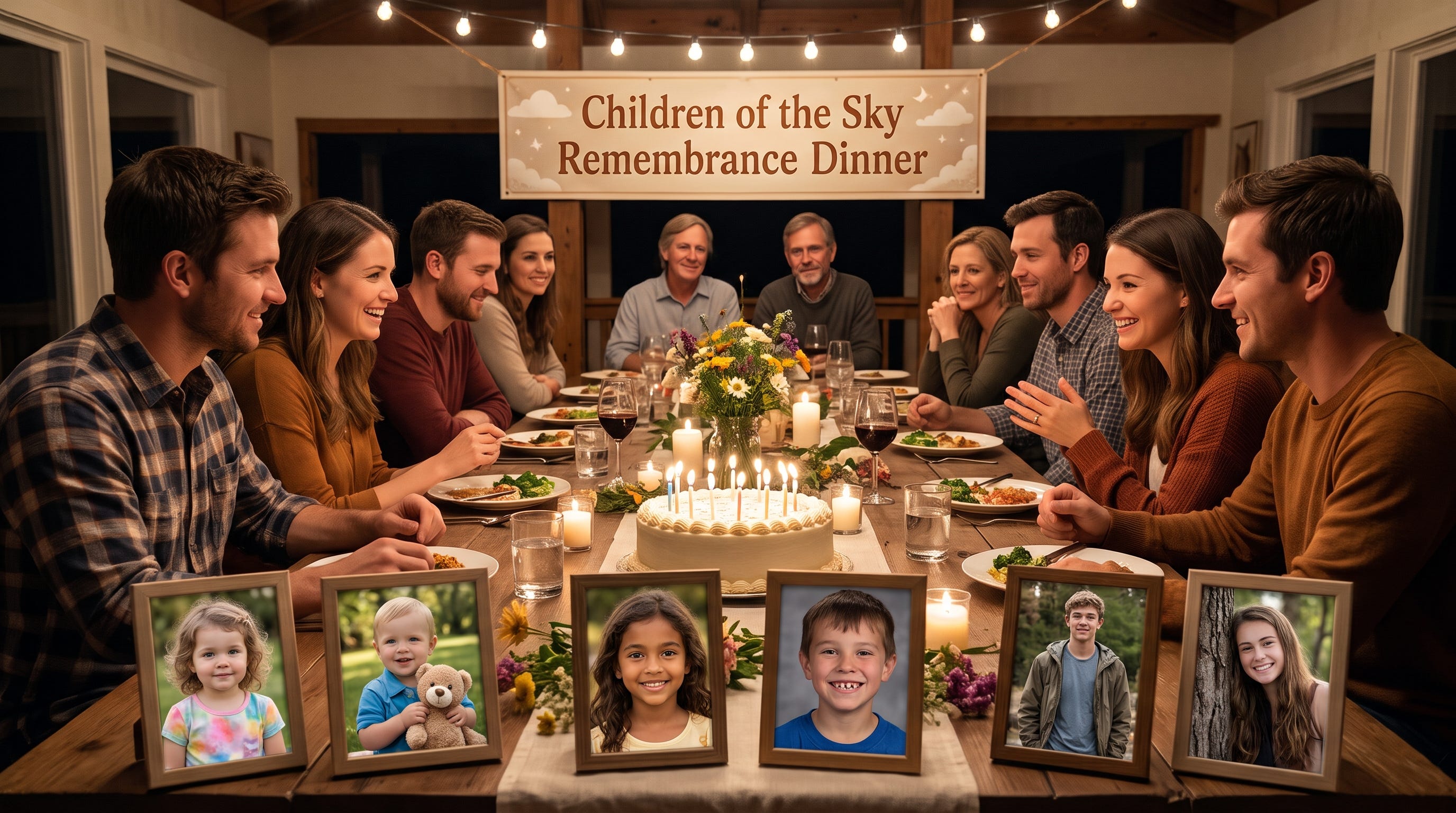
Why should celebrating a birthday, sharing a cake, or lighting candles in honor of someone who has passed ever prompt questions about a family’s emotional health?
There are people who find it strange when a family continues to celebrate the milestones of someone who is no longer physically here. They interpret it as an inability to accept reality, a sign of unhealthy attachment, or an anchor holding them in the past. But what if we are confusing remembering with suffering? What if we have turned silence into a social expectation that nobody actually asked for? Celebrating someone’s life does not mean we haven’t learned how to keep living our own.
Remembering is not moving backward
There is a profound difference between being trapped in yesterday and choosing to keep a bond alive through memory. We can move forward and, at the same time, speak their name, look at their photographs, relive their antics, and smile.
Not every memory requires tears, nor does every special date have to be wrapped in shadows. Sometimes, remembering is laughing out loud at an old joke that never loses its charm, or discovering that someone else held a story we had never heard before. That, too, is honoring a life.
Why should a cake be considered strange?
Picture a table, a birthday cake, framed photographs, and a family singing together in gratitude for what that life meant. An outsider might wonder: “Why do that if they are no longer here?” But the real question should be the exact opposite: “What could possibly be wrong with celebrating a life that existed?”
A candle is not a denial of reality, nor is it a refusal to accept loss; it is a simple, symbolic gesture of love and gratitude. We celebrate anniversaries, milestones, and achievements for people who are far away. Why should we enforce an exception just because someone has departed? Perhaps the real issue isn’t that we keep celebrating, but that society expects us to stop.
Love carries no expiration date
Society tends to follow an invisible calendar: how long to mourn in silence, when to stop saying a name, when to put away the portraits, and the precise moment we are expected to return to “normal.”
Yet love does not follow a calendar. There is no predetermined timeline after which gratitude must fade. Above all, there is no single right way to honor someone: some choose quiet solitude; others, a family gathering; others plant trees, write, or build meaningful projects. Every form is valid. The only sensible rule is never to impose our own ways of grieving or remembering onto others.
Living fully is part of the tribute
Celebrating those who have passed does not compete with the present. We can travel, work, laugh uncontrollably, fall in love, build careers, and embrace the world—all while holding a sacred space for those who once walked beside us. One does not exclude the other; in fact, they nourish each other. The most beautiful way to honor what was given to us is to allow everything good they planted to keep blooming in our journey.
These gatherings also open doors to connection: a dinner or a shared date invites forgotten memories to surface, letting people discover common threads they didn’t know existed. A life continues to touch others through shared stories. Why would we ever deprive ourselves of that warmth?
Let no one’s judgment limit love
Everyone deserves the freedom to navigate loss in whatever way brings peace to their heart. But that same respect must be granted to those who choose celebration.
If a family wants to cut a cake in honor of their child, let them. If friends choose to raise a toast every year for someone who left a lasting mark, let them. And if a mother decides to write about her son, share his pictures, and light a candle on every single one of his birthdays, let her do so with her head held high. Without shame, without unnecessary explanations, and without feeling the need to prove to anyone that she is still moving forward.
The next time we see a family singing around a cake dedicated to someone physically absent, let us replace judgment with reverence for the sheer depth of that love. People are not just part of our lives for the years we share the same physical space; they remain woven into our story through everything they left behind. And where there was that much light, there will always be a reason to celebrate.
❤️💙❤️