
This post is also available in Spanish. Read it here
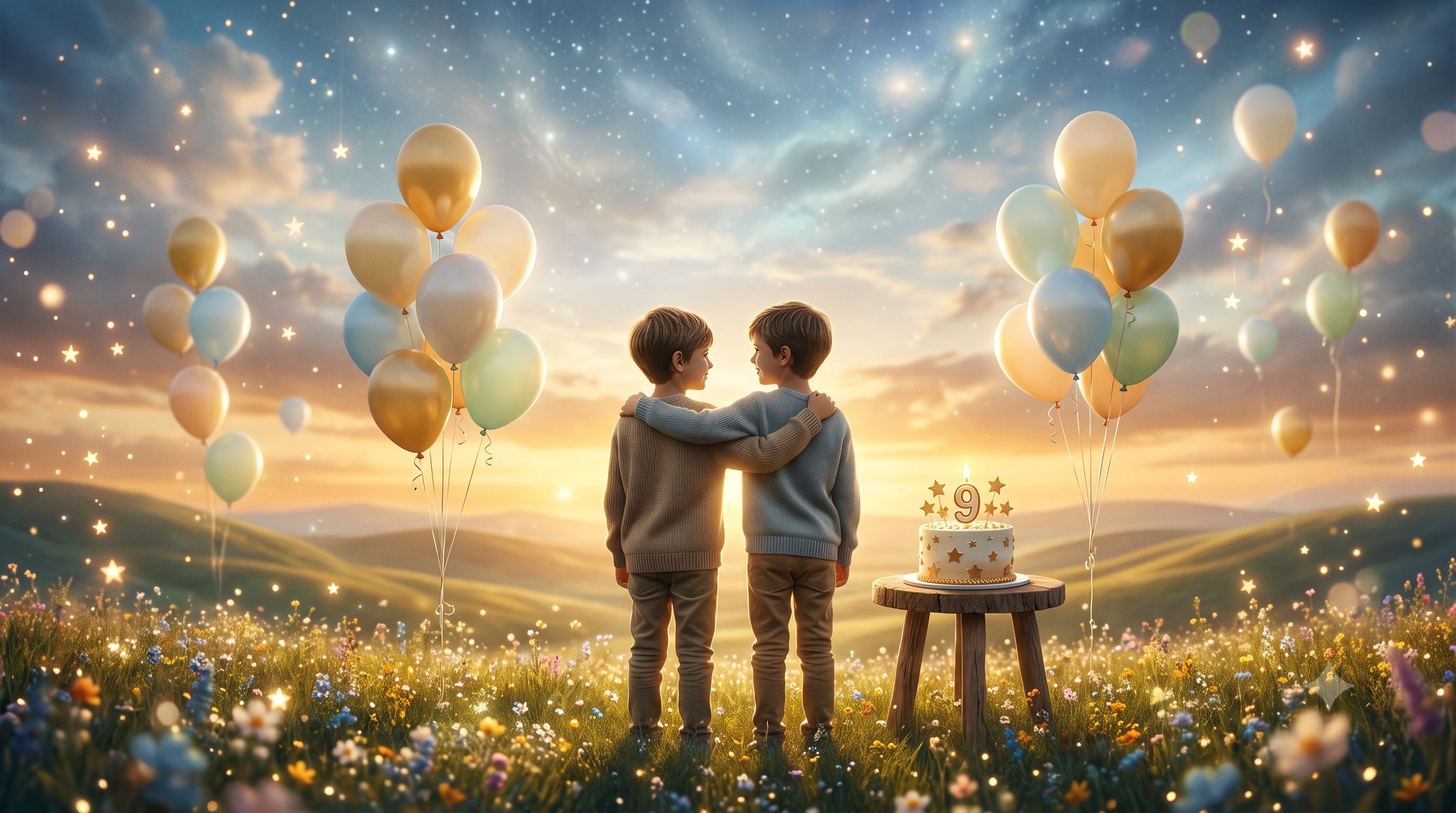
A few weeks ago, an image circulated on social media and sparked all kinds of comments.
It was Lucas’s birthday.
Lucas was turning 9.
But Lucas was not at a party.
He was not blowing out candles surrounded by his friends.
He was not opening presents.
Lucas was trapped beneath the rubble after the double earthquake that devastated La Guaira, Venezuela.
And while his parents desperately waited, hoping that rescue teams would find him alive, they decided to sing Happy Birthday to him.
They brought him a cake.
They sang to him.
They celebrated his ninth birthday.
And some people criticized them.
They judged them.
They wondered how they could celebrate a birthday in the middle of such a tragedy.
I, however, find myself asking something different:
Who has the right to tell parents how they should love their child?
They were not celebrating Lucas’s death.
They were celebrating his life.
They were celebrating his nine years.
They were saying, perhaps with the only strength they had left:
Lucas, we are here.
We have not forgotten you.
Today is your birthday.
We are still waiting for you.
And perhaps that cake was not a celebration.
Perhaps it was hope.
Perhaps it was love.
Perhaps it was the way his parents found to continue being his mother and father while waiting, in the middle of an unimaginable tragedy, for their son to return to their arms.
The next day, Lucas was found without life.
And then I thought of Matías.
My Matías.
On July 26, he turned 9 years old.
Lucas turned 9 on July 6.
Two children.
Two completely different stories.
Two birthdays.
Two families forever changed by the greatest love there is and by a pain no parent should ever have to know.
Lucas and Matías never met in the physical world.
But today, I feel that they are connected by something that goes beyond their stories.
They both turned 9.
They were both deeply loved.
And they both have mothers who, in different ways, have had to learn how to live in a world where their children are no longer physically present.
Lucas’s mother is also a psycho-oncologist, and she has recently specialized in supporting patients and families throughout the journey of illness, treatment, and grief.
I think about that, and it moves me deeply.
Because sometimes life takes us to places we would never have chosen.
And perhaps, one day, her experience, her knowledge, and her own heart will become a refuge for other families.
Not because pain makes her stronger.
But because she knows, from the inside, the territory that others are only beginning to walk through.
I know there are people who still do not understand why some of us continue to celebrate our children’s birthdays after they are gone.
Why we post their pictures.
Why we write about them.
Why we say, “Happy Birthday.”
Why we light candles.
Why we bring flowers.
Why we continue to talk about them.
The answer is simple.
Because we are still their mothers.
Death changed our motherhood.
It changed our lives.
It changed the way we hold, remember, and celebrate.
But it did not change the fact that they existed.
It did not change the love.
It did not erase their birthdays.
It did not erase their names.
It did not erase the nine years they lived.
And perhaps this is something our society still does not know how to accept.
We want grief to have rules.
We want to know when someone should cry and when they should stop crying.
When they can smile.
When they can talk about their child.
When they should remain silent.
What is allowed and what is not.
But grief does not work that way.
There is no right way to miss someone.
There is no right way to remember.
There is no right way to celebrate the life of someone who is no longer here.
A cake can be grief.
A song can be grief.
A photograph can be grief.
A smile can be grief.
A birthday can be grief.
And saying “Happy Birthday” to a child who is no longer here can also be one of the deepest ways of saying:
“Your physical life mattered.”
“Your existence matters.”
“I still love you.”
Perhaps the problem is not that some people celebrate their children’s birthdays after they are gone.
Perhaps the problem is that we still live in a society that does not know what to do with love when physical death arrives.
Because we believe that when someone is no longer here, we must stop talking about them.
Stop saying their name.
Stop celebrating their life.
As if remembering means holding on to the past.
As if loving after death means we are not moving forward.
But I have learned that it is not that way.
I can keep living.
I can laugh.
I can make plans.
I can love.
I can move forward.
And at the same time, I can celebrate my son’s ninth birthday.
I can say:
Happy Birthday, Matías.
And I can think of Lucas.
His nine years.
His parents.
That cake.
That song.
That love that refused to disappear, even in the middle of the rubble.
Because perhaps that is what we do with love when death arrives.
We do not let it die.
We learn to carry it in a different way.
And perhaps that is why, even though our children are no longer physically here, their birthdays continue to come.
And we continue to celebrate.
Not because we do not know that they are no longer here.
But because we know that they lived.
Because they are loved.
Because they exist.
Because they are ours.
And because the love—the immense love we feel for them—does not end when physical life ends.
Love does not die.
It changes form.
But it remains.
Happy Birthday, Matías.
Happy Birthday, Lucas.
Nine years old.
Two eternally loved children.
And two mothers who, each in her own way, continue to say:
You are here.
You belong here.
We still love you.
❤️💙❤️